US Green Card: what it is and how to get one through talent
Important: this page is for informational purposes only. We are not lawyers, we share information from open sources and do not provide any legal or immigration advice or consultations. The full liability disclaimer is located at the bottom of the page.
A U.S. Green Card is an official document that grants its holder permanent resident status in the United States. According to USCIS (U.S. Citizenship and Immigration Services), having a Green Card (Permanent Resident Card) allows a foreign national to live and work permanently in the U.S. This plastic card contains your photo and personal information — essentially an ID confirming you are now a "local" in America.
The name "green card" is historically no coincidence: the first such documents were indeed green (back in the 1950s). The card went through several color changes, but in 2010 it returned to a greenish tint. So the joke about there being nothing green about a green card is partially outdated.
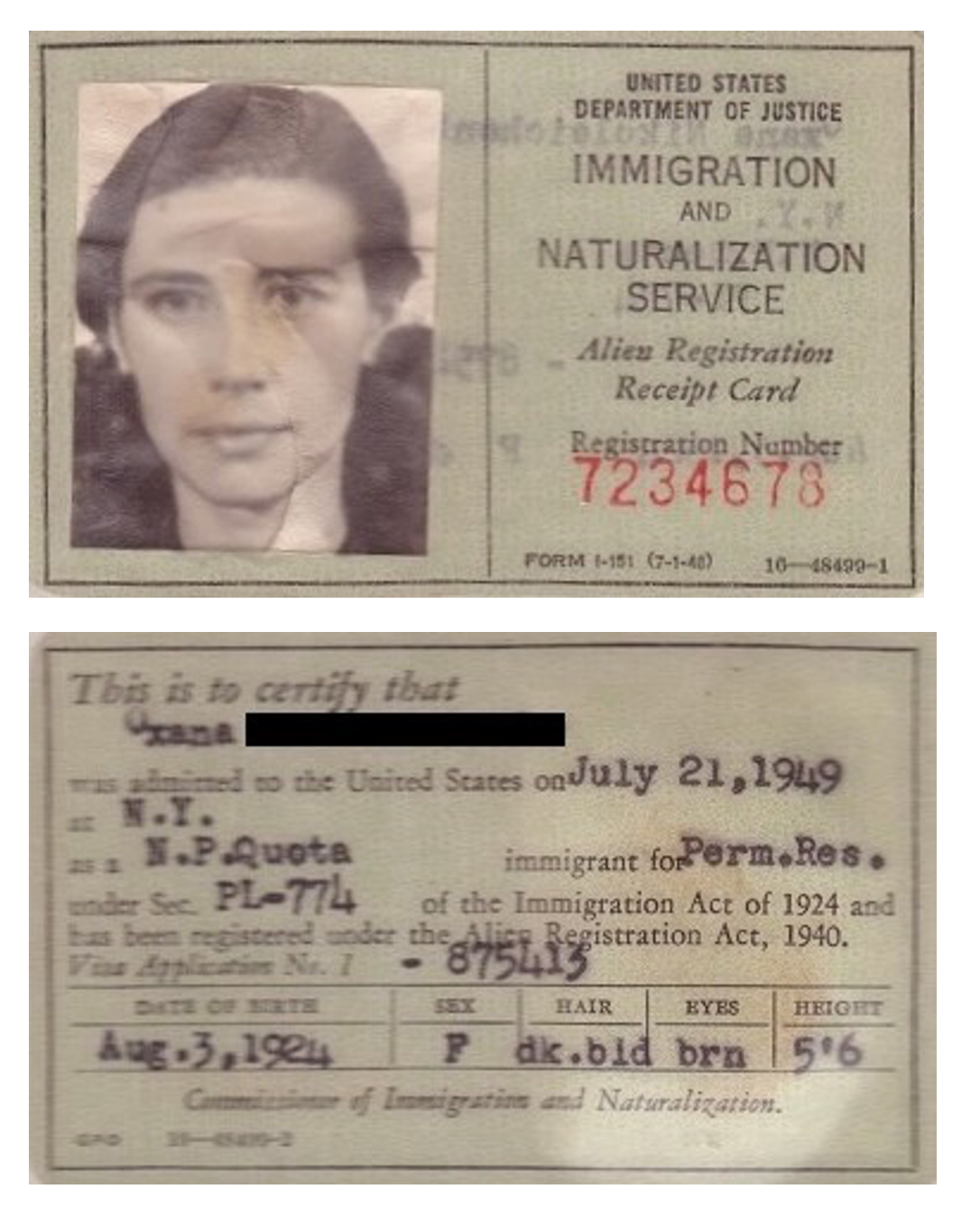
Photo: Green Card from 1949
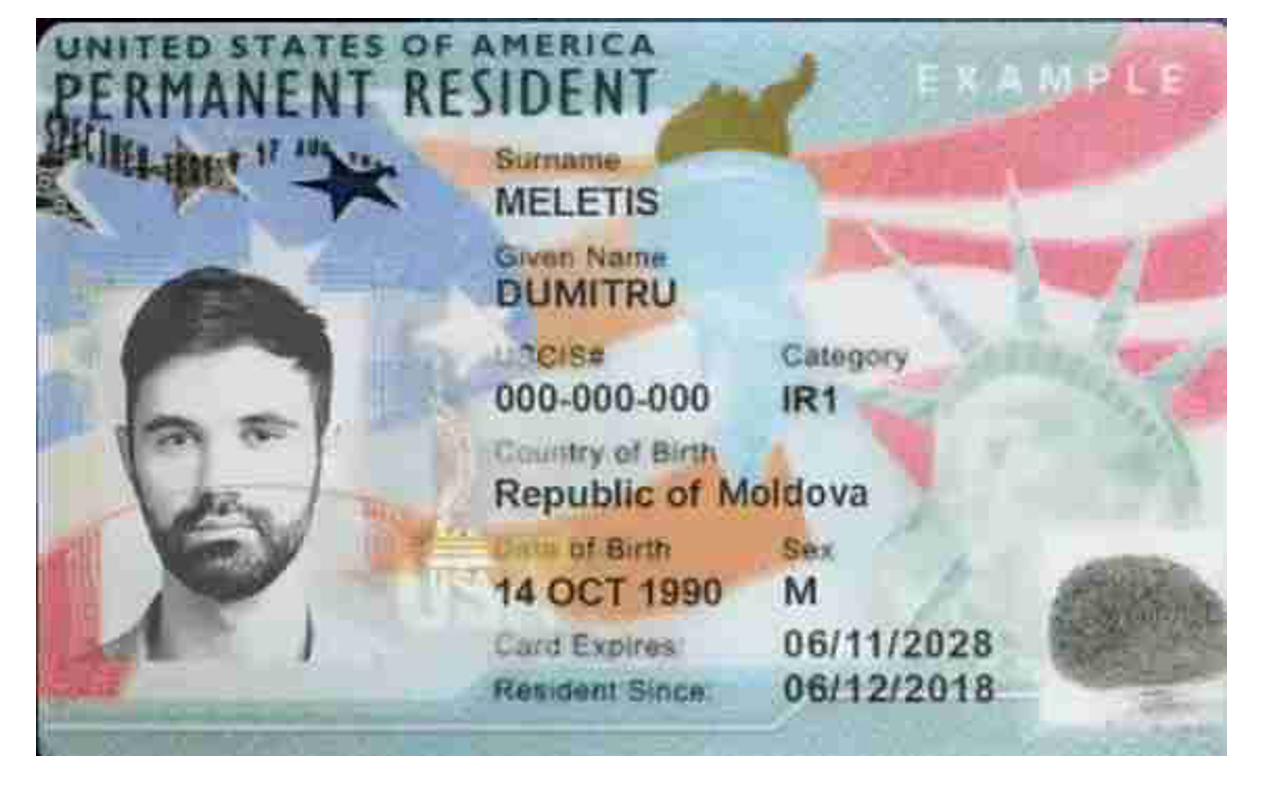
Photo: the modern Green Card also features green colors.
What rights does a Green Card provide? First and foremost, the right to live in the U.S. without time or location restrictions: you can settle in any state from California to Alaska. You gain the right to work in virtually any job or start your own business — no more work visas or sponsors needed.
Permanent residents can also study at schools or universities, use social benefits (such as Medicare/Medicaid if eligible), and even enlist in the U.S. military. After five years as a resident (or three years if the Green Card was obtained through marriage to a U.S. citizen), you'll be eligible to apply for U.S. citizenship. However, a permanent resident is not the same as a citizen: some rights (such as voting in elections or holding certain government positions) remain unavailable until you go through naturalization.
On the other hand, permanent resident status is indeed permanent — it doesn't expire as long as you don't violate the terms of your stay. Only the physical Green Card needs to be renewed every 10 years (like a passport), and in the case of a conditional Green Card, conditions must first be removed after 2 years.
What obligations and restrictions does a Green Card holder have? With great "American power" comes great responsibility. Upon receiving status, you must obey U.S. laws (and state laws) and diligently pay taxes — Uncle Sam now expects your tax return every year. Men of draft age (18–25) must register with Selective Service. If you change your address, you must notify USCIS within 10 days.
Can you lose your Green Card?
A Green Card holder must maintain close ties with the U.S. as their new home. In other words, don't stay out of the country for too long. If you're absent from the U.S. for more than 6 consecutive months, a border officer may question whether you've decided to permanently relocate back. And absence of more than 1 year without a special permit (Re-entry Permit) can result in loss of status.
For extended trips abroad, there's the mentioned Re-entry Permit — a kind of "leave of absence" for residents that allows you to legally return to the U.S. even after more than a year's absence. And one more detail: if you're 18 or older, carry your Green Card with you — the law requires you to always have it on you.
So, a Green Card is serious. It's not a tourist multi-visa or a "backup plan" in case of trouble. The U.S. government expects a permanent resident to actually live in America most of the time, integrate into society, and fulfill their obligations.
Main pathways to getting a Green Card
Discover new international opportunities right now
Complete your professional profile assessment in 2 minutes and find out:


The page you will be redirected to is exclusively related to building a professional profile and does not provide visa, immigration, or legal services and is in no way affiliated with the Knowledge Center educational platform.
After completing the test, you can return to this page or book a PR consultation with specialists we've verified.
For all questions regarding public profile building, publications, scholarly materials, interviews, and comprehensive professional positioning, we recommend the PR platform Persona System , which systematically works in this field, has been verified by us, and has signed the ethical memorandum on the .
On the page you can learn more about the Persona System platform, or choose other specialists who have also signed the ethical memorandum and work in this field.
Persona System provides exclusively PR and media support and does not provide legal or immigration advice.
We do not place paid advertising and do not receive payment from companies for placement in the "Specialists we recommend" section. This section includes only specialists and companies that have signed the ethical memorandum on the .
The United States is a nation of immigrants, so there are many ways to become one. Here are the main routes people use to obtain the coveted Green Card:
Diversity Visa Lottery (DV Lottery). Each year, the U.S. government randomly selects up to 55,000 immigration visas among applicants from historically underrepresented countries. Participation is free: you just need to fill out an electronic form on the official website during the lottery period (usually in autumn). If you're lucky and win — you'll go through eligibility checks (at least secondary education or certain work experience is required), a medical exam, and a consular interview.
Family reunification. If you have close relatives in the U.S. (citizens or, in some cases, Green Card holders), they can sponsor your relocation. It's easiest for spouses of U.S. citizens, their parents, or children under 21 — these categories are called Immediate Relatives, and there are no annual quotas or long waits for them.
Marriage to a U.S. citizen. Yes, marrying an American gives you the right to a Green Card, but not automatically or instantly. You'll need to prove the marriage is real. You'll first receive a conditional Green Card for 2 years (CR1 status), and after that period, a joint application is filed to remove conditions (Form I-751).
Employment and career. The U.S. is interested in talented and hardworking migrants, so there are special EB visas (Employment-Based) that allow obtaining a Green Card through work. For example, EB-2 is for professionals with advanced degrees. EB-3 for skilled workers. EB-4 for special immigrants. EB-5 for investors.
Extraordinary ability: O-1 and EB-1 visas. If you can meet 3 out of 10 criteria that we've detailed on this site, the doors of America are opened especially wide. O-1 is a non-immigrant work visa for "aliens with extraordinary abilities" — a temporary status. This resource is dedicated to those seeking these two types of visas.
That's exactly why we created this Knowledge Center — specifically for O-1 and EB-1. These categories are special because they give talented people the opportunity to immigrate thanks to their achievements. According to official USCIS rules, you can file an EB-1A petition yourself (self-petition), and for O-1 — through a U.S. employer or agent. All details, criteria, and examples are further on the site.
Investment (EB-5 program). Have a spare half million dollars and a desire to invest in the American economy? The EB-5 program grants a Green Card to foreign investors who invest a significant sum in a U.S. commercial project and create at least 10 jobs. Minimum investment ranges from ~$800K (in targeted employment areas) to ~$1M+ elsewhere. In 2025, EB-5 requires $1,050,000.
Refugee/Asylum. The U.S. provides asylum to those who have suffered persecution or have a well-founded fear of persecution based on race, religion, nationality, social group, or political beliefs. After successfully obtaining status, a person can apply for a Green Card after 1 year of living in the U.S.
Finally, it's worth remembering: a Green Card is a privilege, not a guaranteed right. The U.S. receives hundreds of thousands of applications from those wanting to become residents each year, so competition is fierce. But for those who truly aspire to become part of the American dream — and are ready to follow the rules — a Green Card opens doors to limitless opportunities. Welcome on board! 🚀
Sources: USCIS, U.S. Department of State, immigration guides.
Last updated 3 months ago
Disclaimer
The "Knowledge Center for O1 and EB1 Talent Visas" platform is an independent informational resource created solely for educational and informational purposes.
We are not lawyers, a law firm, or accredited immigration representatives and do not provide legal or immigration advice.
All information on the site is general in nature and based on open sources.
Information published on the site may be summarized, simplified, or incomplete. We do not guarantee its completeness, accuracy, or timeliness and are not responsible for any actions, decisions, or consequences that may arise from the use of this content.
Before submitting any documents or making important decisions regarding immigration procedures, consult a licensed attorney in the United States if needed.
Materials published on the platform may be distributed for non-commercial purposes with attribution to the source.
Please include a warning that these materials do not constitute legal advice and do not guarantee approval of any visas or petitions.
By using this site, you confirm that you have read the terms of this disclaimer, understand that all materials are for reference only, and agree that the Knowledge Center for O1EB1 Talent Visas bears no legal or other liability for any use of the published information.
The platform is not an official resource of the U.S. government or USCIS and has no formal affiliation with them.
This project aims to combine knowledge, experience, and open sources to help professionals better understand their opportunities. However, each path is individual. If in doubt, consult professionals.
By using this platform, you confirm that you have read and agree to our Terms of Use, Privacy Policy, and Legal Disclaimer, available in the respective sections of this resource.